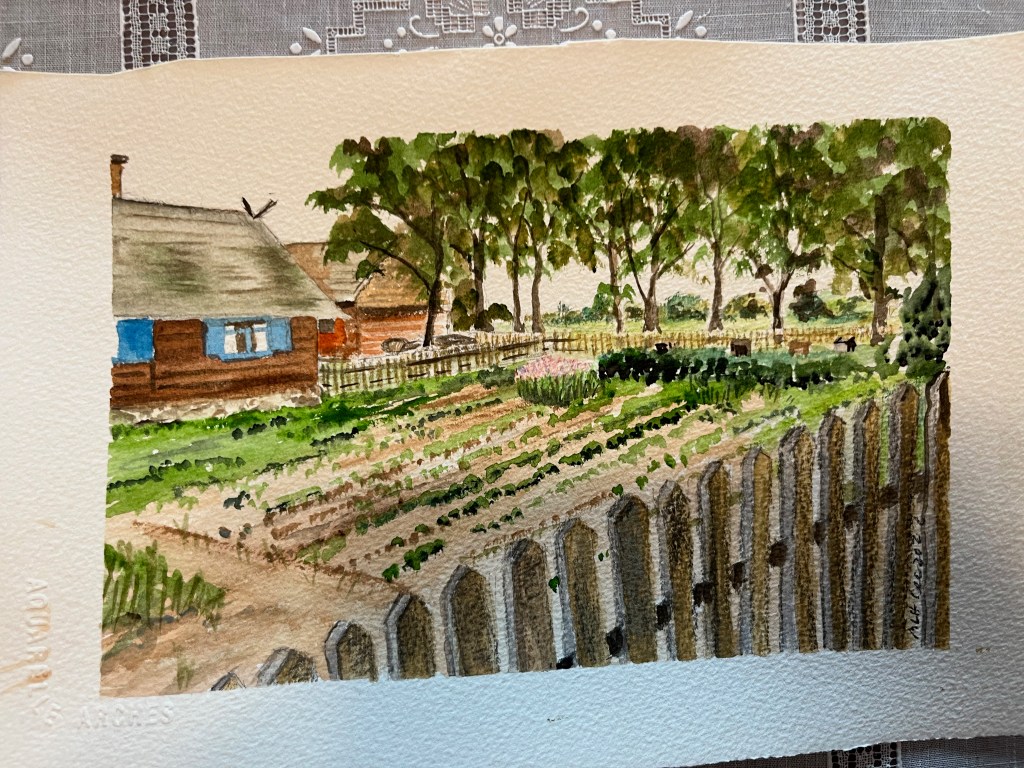
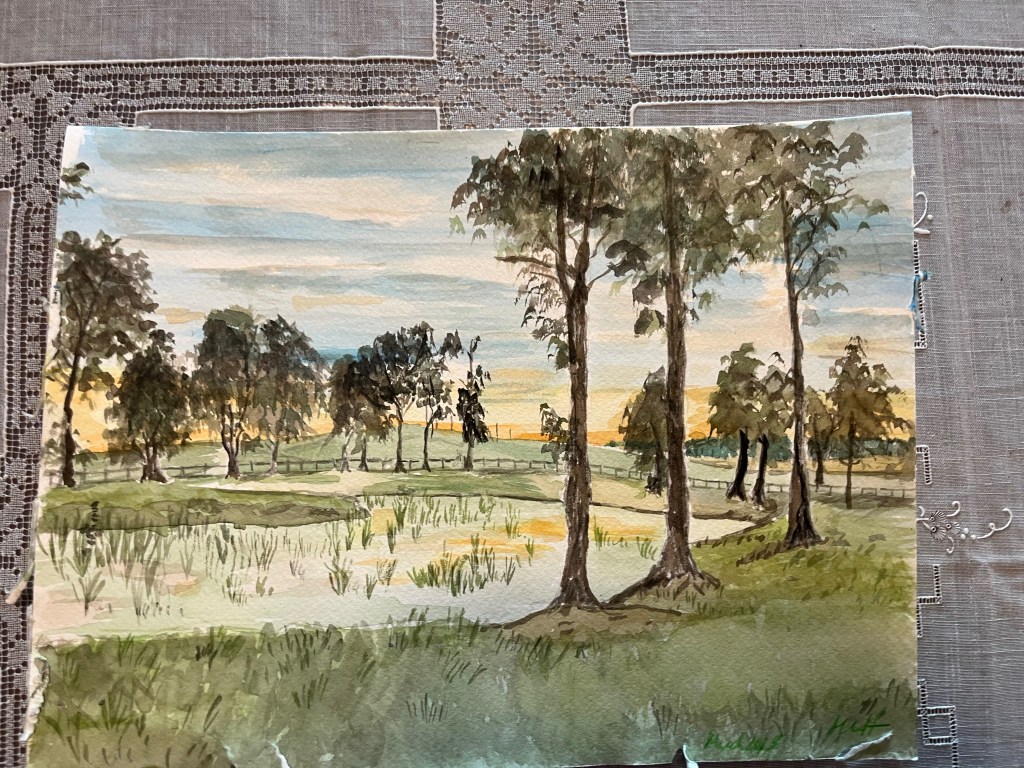
I have a visual condition called strabismus. The musculature around my eyes is off kilter; each eye acts independently of the other.
My childhood was a world of shifting horizons and repetitive patterns. Depth was deceitful. Horizons blurred. Finally, at age eleven, a miracle occurred. My parents found a surgeon who could tighten those rebellious muscles. Suddenly my world was clear. I could balance on a fence, hit a ball with a bat, do a cartwheel. That remedy held firm until my mid fifties, when I began experiencing the world as if terminally hung-over. When my eyes were very tired, I saw double. So finally, at age sixty-two, I had another strabismus surgery. The days following that procedure were revelatory.
Do you know what happens when the eyes are repositioned and resecured in your head, even a fraction of a millimeter? For a day, I saw side-by-side images of my surroundings. By the second day, the images tilted into each other, colliding at odd angles. The intersections blurred. My brain was rewiring itself, processing this new input, making it whole again. The third day was an impressionistic scramble as the images collided until finally, the next day, I was seeing singly again. I even had depth perception. The surgeon said I was remarkable – rarely does a second strabismus surgery end so successfully.
Here’s the catch: I also had a cataract. I had been advised to have my repeat strabismus surgery before having my cataracts removed. I waited two years after the second strabismus surgery for the cataract surgery. No one told me that a possible outcome of cataract surgery was strabismus. Guess what? The remarkable work of my second strabismus surgery was undone by the cataract surgeon. My cataract is gone, but I now spend my days negotiating two images again, which means looking at the world one eye at a time. Sometimes seeing double.
Perhaps that’s why I enjoy painting reflections. Nature naively reflected on water has become my favorite subject.
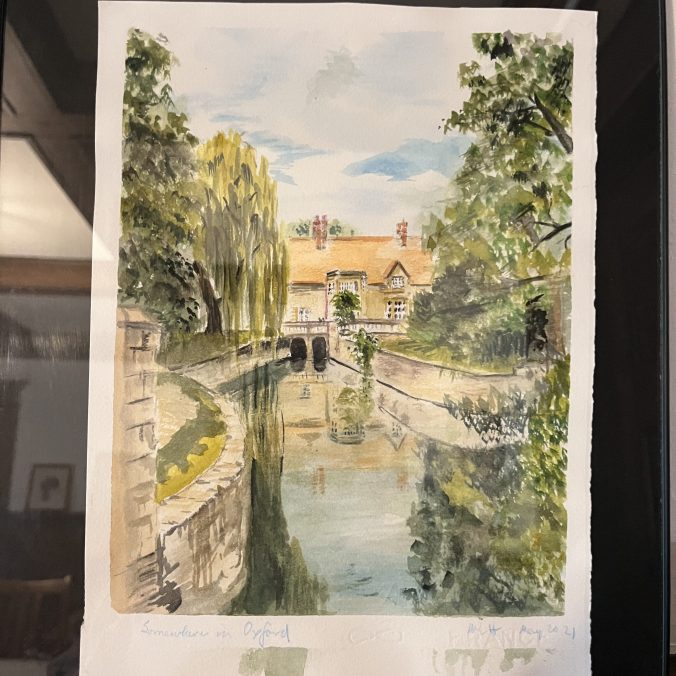
Nature isn’t narcissistic: its duplicated beauty is enhanced because it lacks self-consciousness. The double images produced are as pleasing as a palindrome.
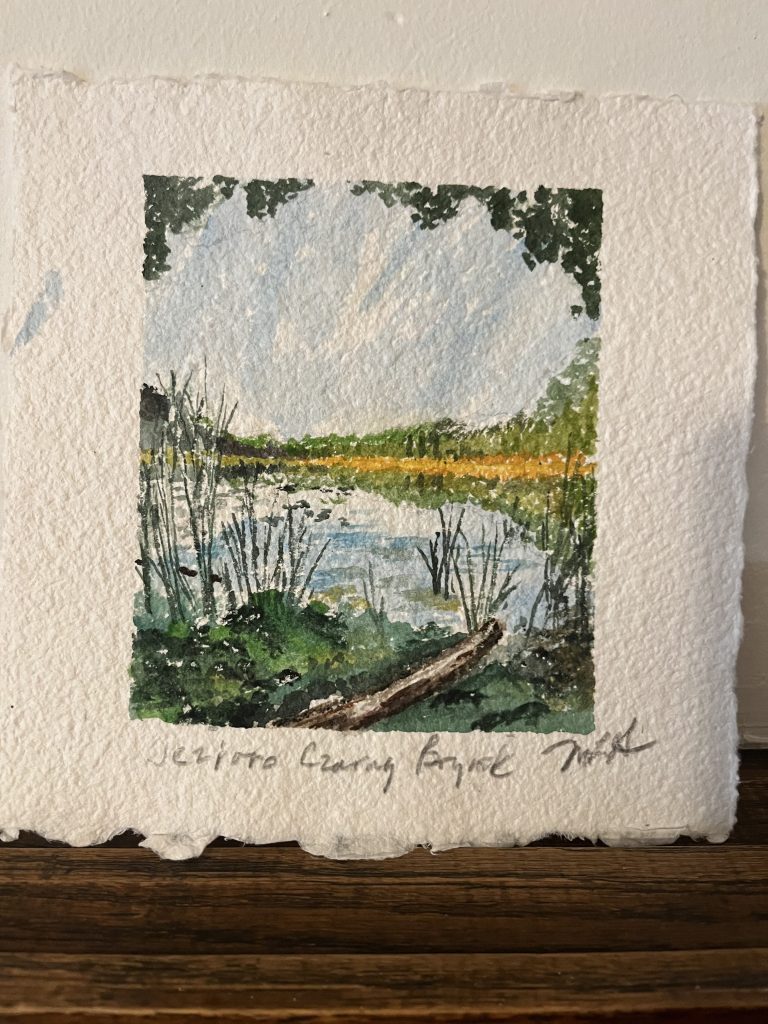
Tipped sideways, reflected nature produces abstraction.
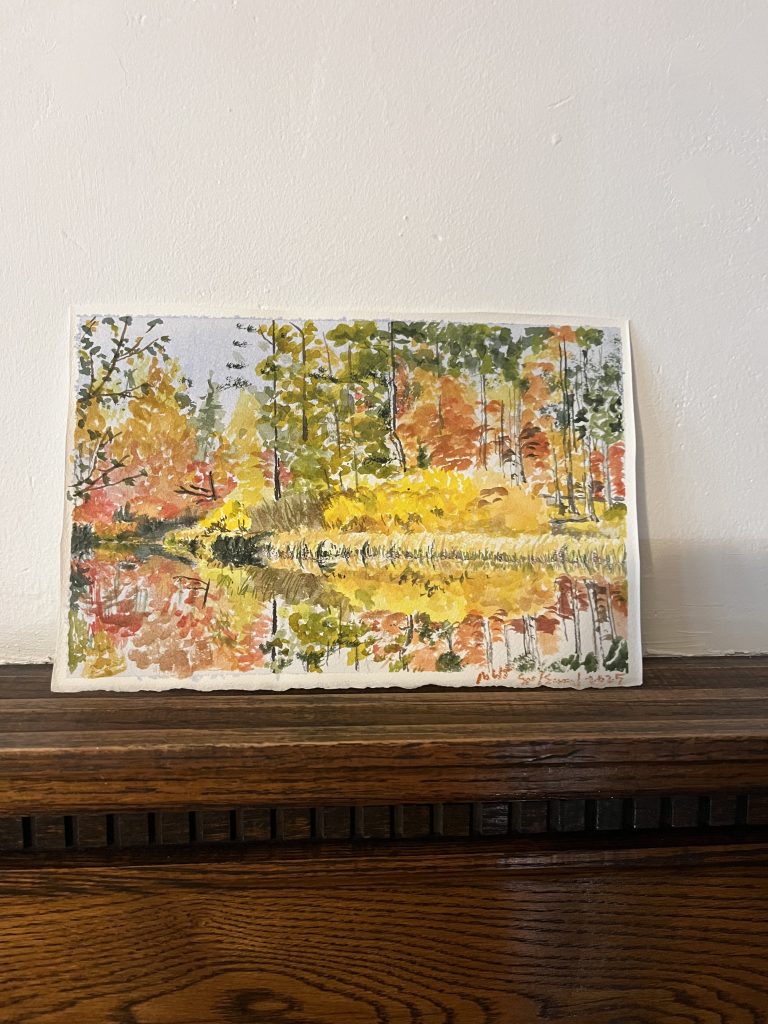
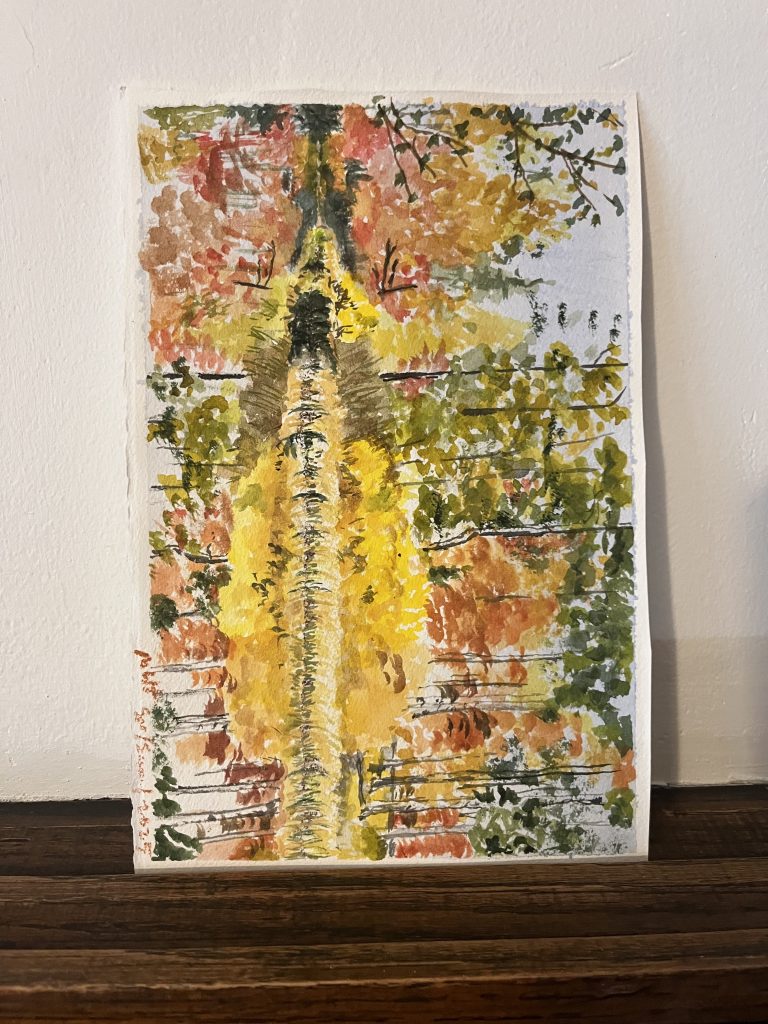
Given the right canvas, nature can reflect itself doubly:
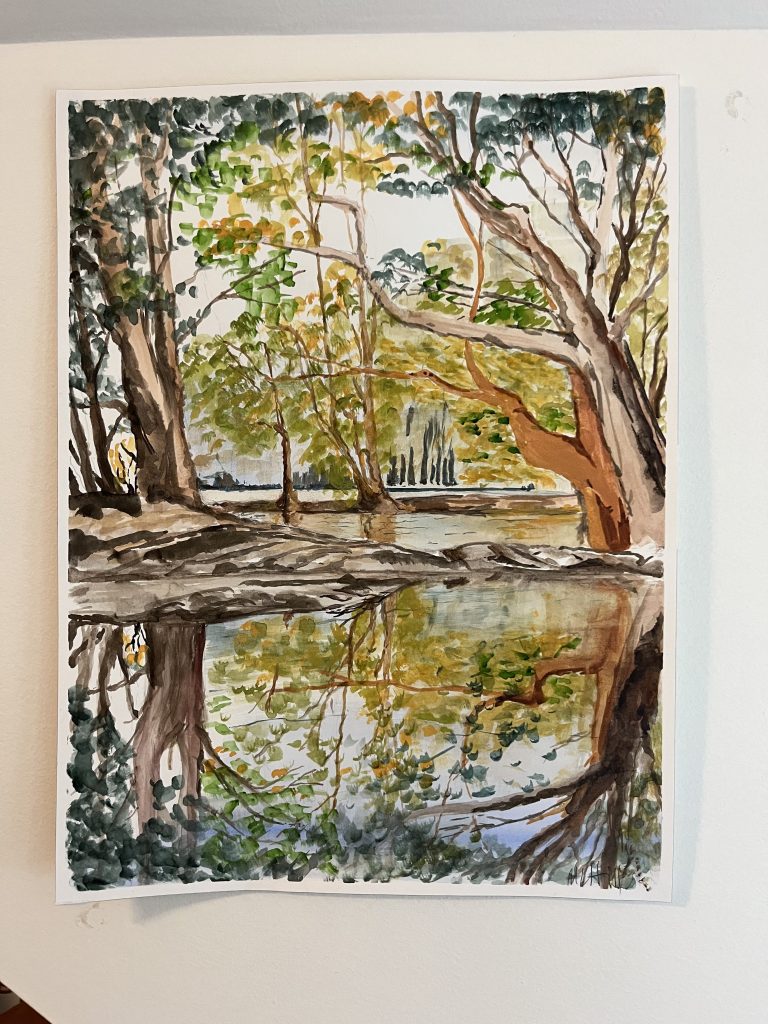
Is it simply the natural duplication of beauty that we revel in? Or is it something more? Does nature’s reflection of itself hint at a more expansive patterning that human vision can’t perceive?