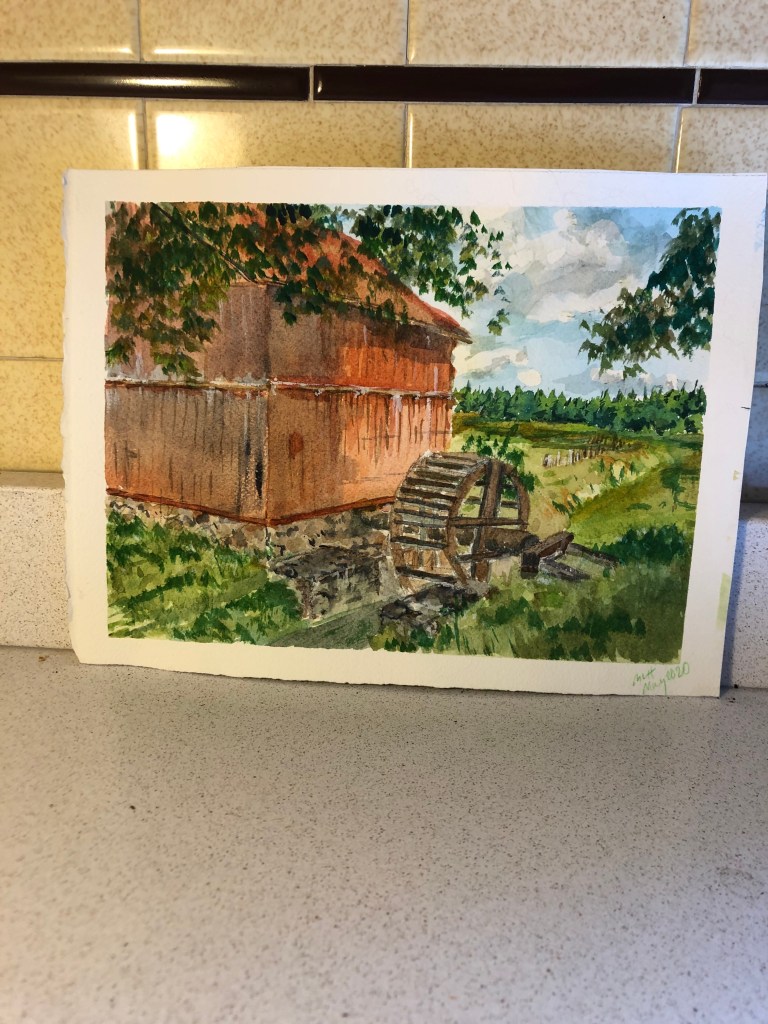
Process Paintings, Continued

A recent collection of the process paintings that have helped me imagine the world of my the novel,The Double Souled Son. (This book has also been marketed as The Polish Assassin.) It begins in a Prussian occupied Polish village, in 1861. Earlier paintings can be found at “Process Paintings” in 2021.

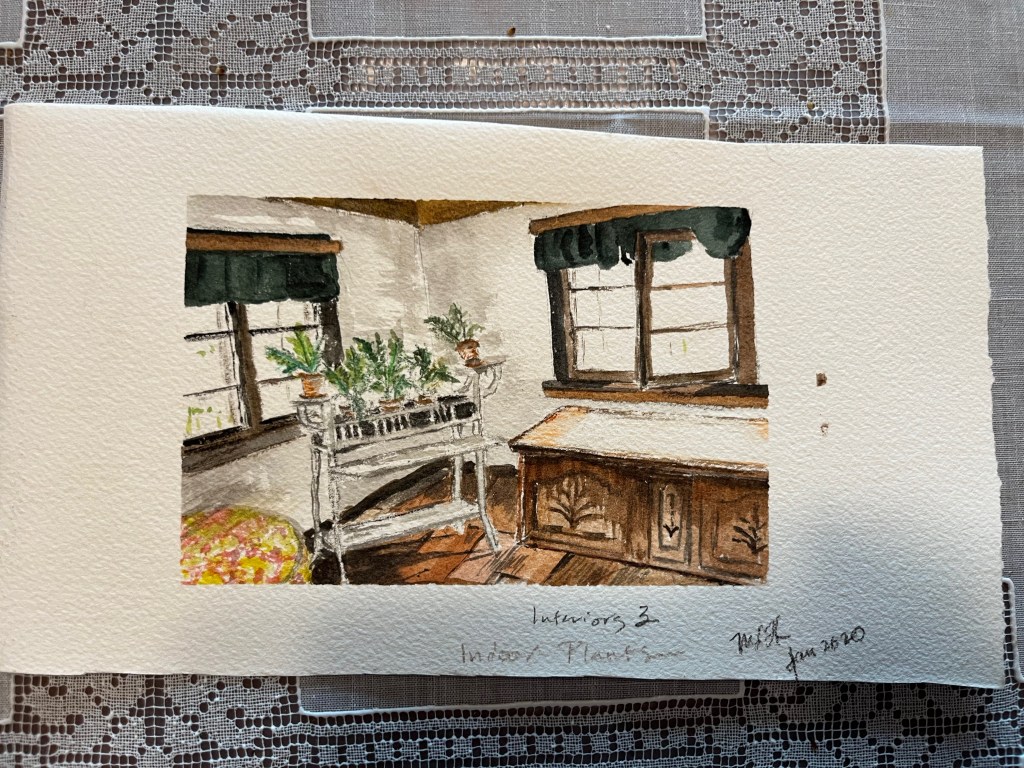
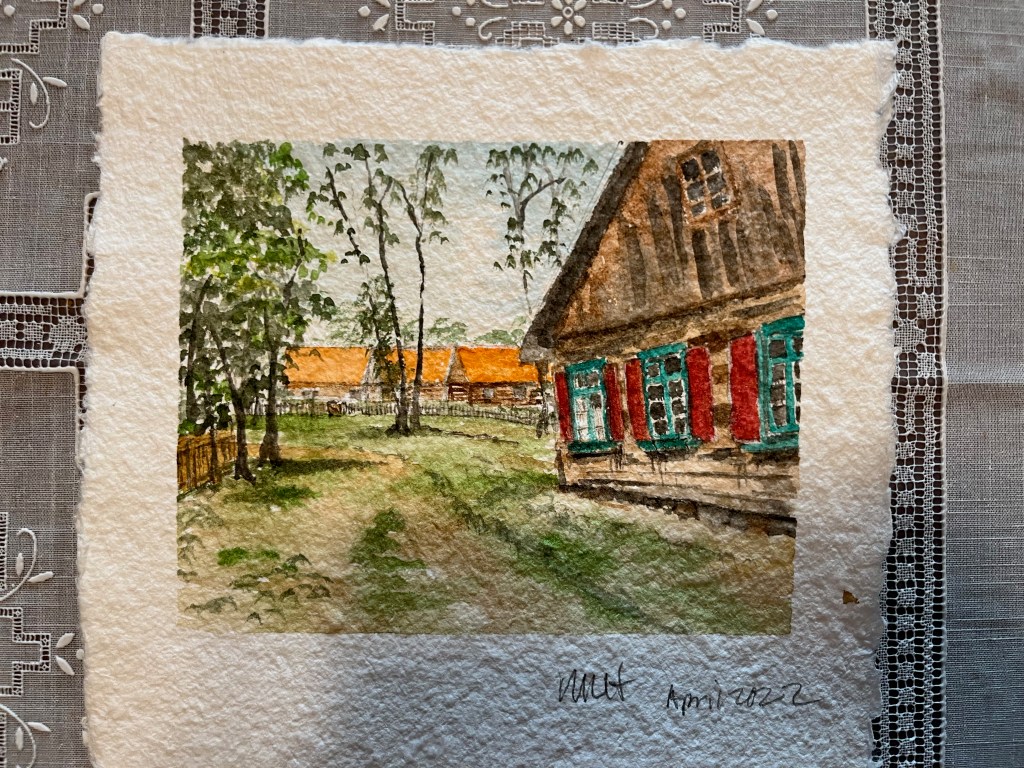
Unless otherwise marked, these paintings are based on photographs taken at the Museum of Folks Architecture, Olsztynek, Warmia and Masuria, Poland.

Interiors

The protagonist becomes a wheelwright:

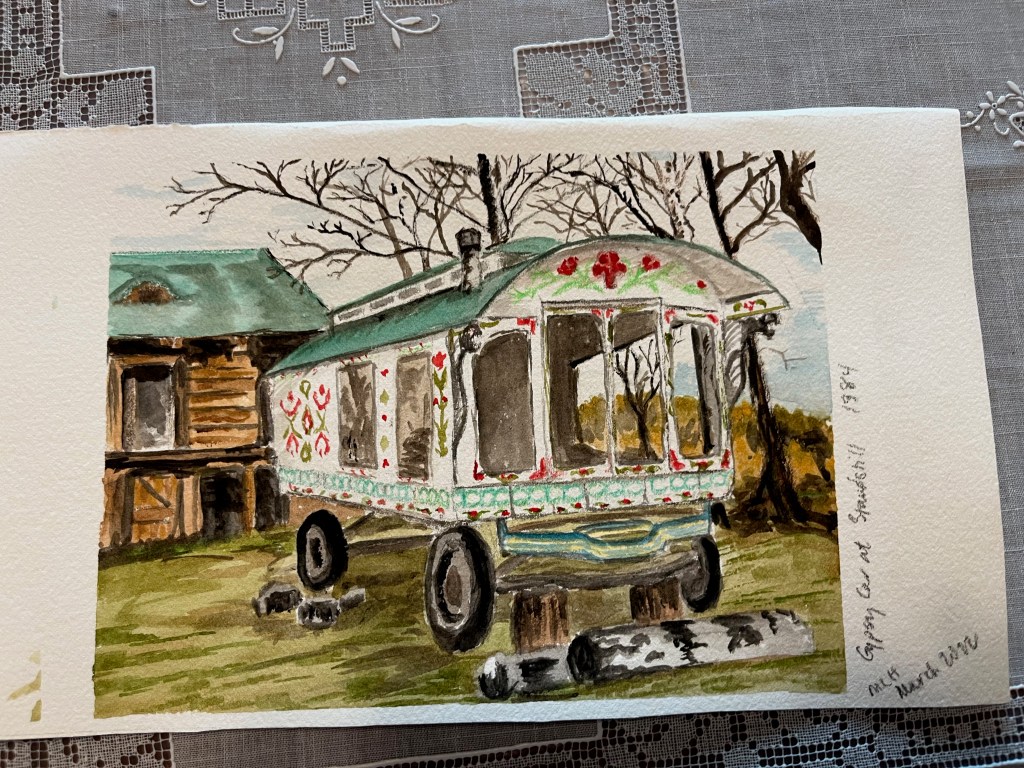
Gypsy Cart At Standstill. (based on a 1984 image from Jerzy Ficowski’s The Gypsy In Poland: History and Customs.
Exteriors
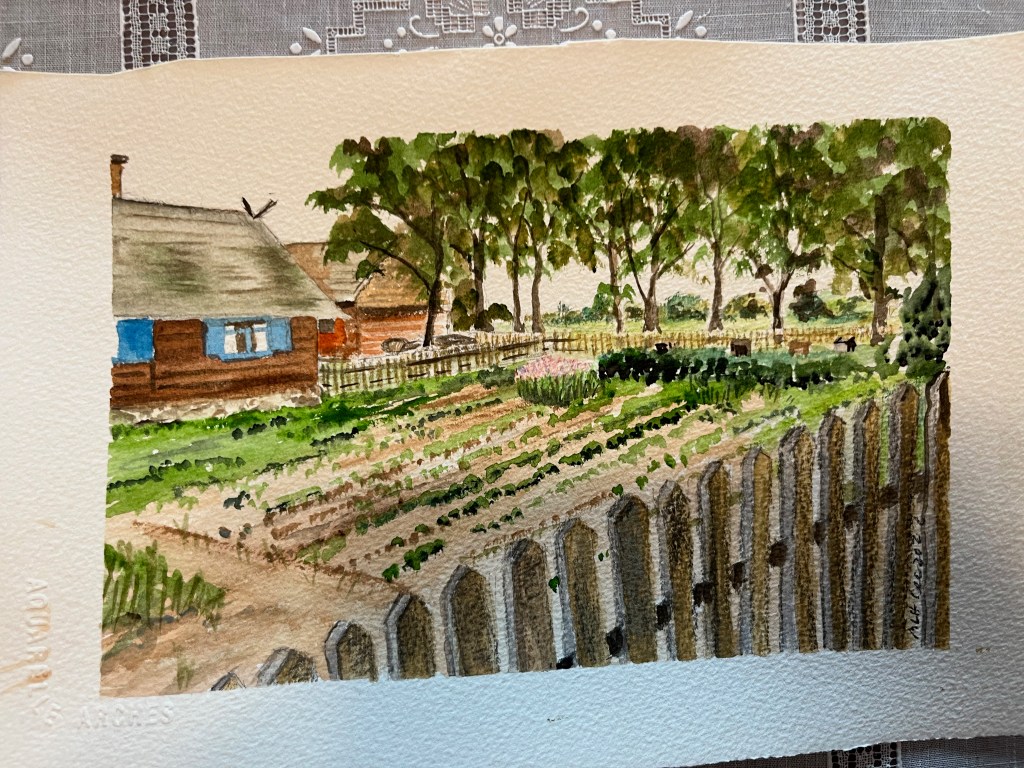
(The following painting is based on a photo taken on the grounds of the Myśleta Pałac Spa and Hotel in Uzdowo, Poland.)
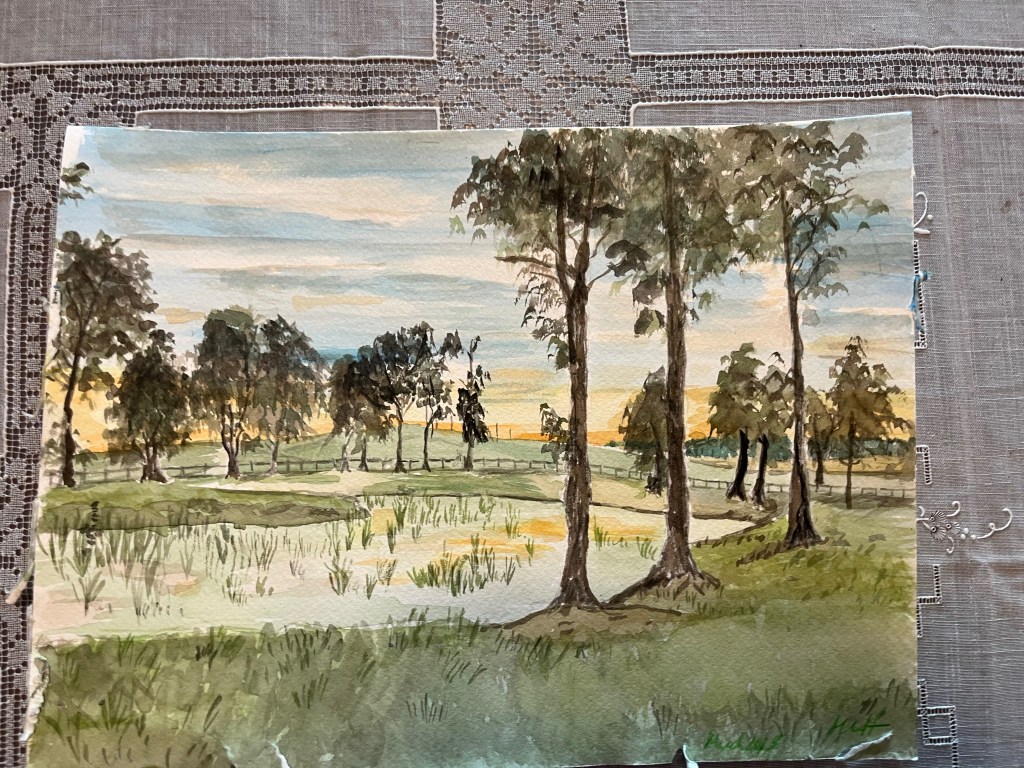
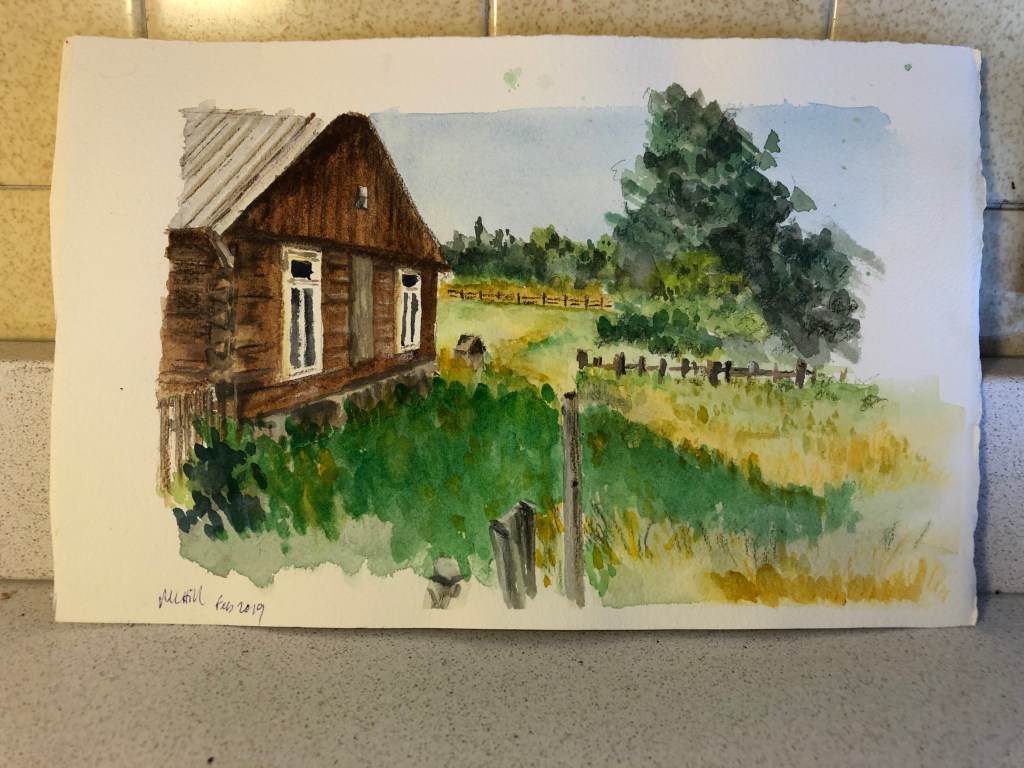
In 2022, I found this cottage in Czarny Bryńsk, Poland advertised on Air B&B, and I screen-shot a photo of it. Over half of The Polish Assassin (formerly titled The Double Souled Son) takes place in a cottage in Czarny Bryńs. I imagined it to look like this one. (I found this listing several years after I created my setting.) Maybe I’ll get to stay here some day. Maybe not. It’s not on Air B&B anymore. So I guess I’ll have to settle for painting it.

Gus, my resident art critic

Doubly Cursed: Process Paintings

I’m working on what I hope will be final drafts of my novel. The book is called Doubly Cursed. I’m working on a concise summary, since I’m preparing to pitch it at the end of next week. Once I’ve concocted one, I’ll include it.

The first half of the book is set in late 19th Century Poland. The area I’m focusing on was in West Prussia then. The village is Czarny Bryńsk, which is the last place my Górzyński ancestors lived before they immigrated.

The main characters? The Górzyńskis, of course. Absolutely fictionalized. Mythologized, even.

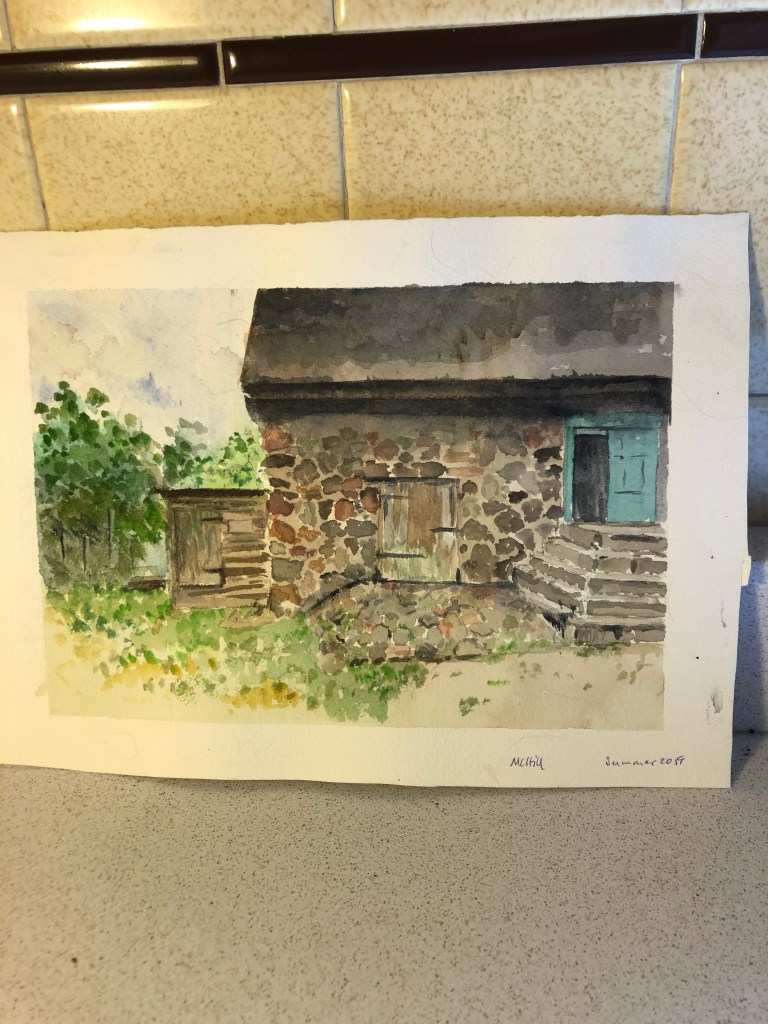
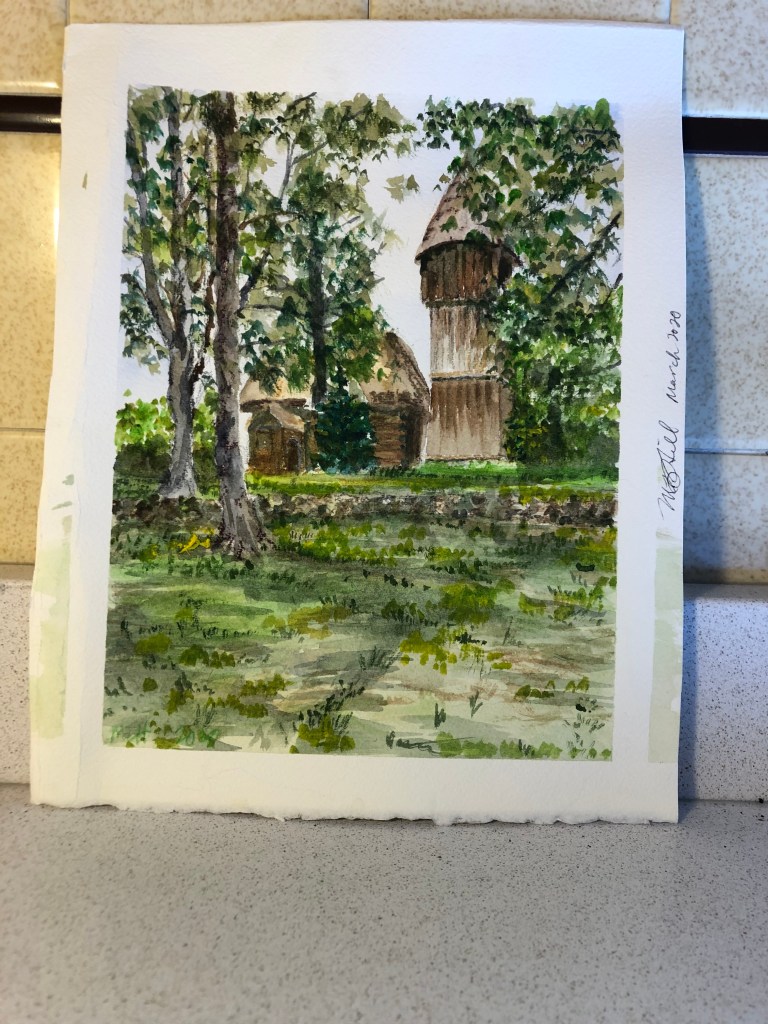
The Górzyńskis were woodsmen, and carpenters. In order to access an intimate know of woodworking and building in Poland, I did paintings. All of these paintings are based on photos that I took during my 2018 visit to Poland. One is based on a building still standing in Czarny Bryńsk. The others are buildings from the region and the period, now located at the Museum of Folk Architecture, Olsztynek, Warmia and Masuria, Poland, Europe.

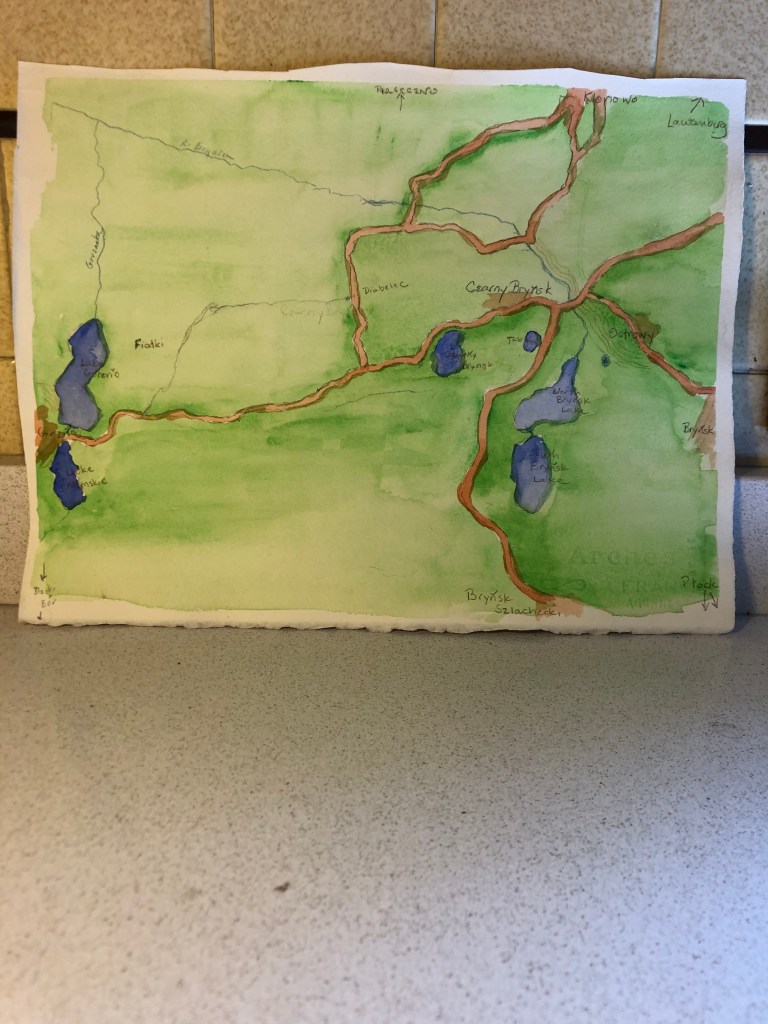
In order to imagine locations, I painted a map. I need to redo this. I have a different picture of the landscape now, and the relationships between the villages. I’m simplifying an important village relationship in this painting above. Czarny Bryńsk means “Black Bryńsk.” I’m only calculating the relationship it had to Bryńsk (mid low right quadrant), but I now guess that Bryńsk and not Górzno was the usual market town for someone in Black Bryńsk.) I had to rewrite some stuff when I figured that out.
Czarny Bryńsk house, from the time period of the book. The last time I checked, it was an Air B&B. Czarny Bryńsk has very few residents now. It houses the offices of the Górznienńsko-Lidzbarski Park Krajobrazowy. (Gorzno-Lidzbark Landscape Park.). It is surrounded by amazing parkland.
Interior Shot. Early painting.
Through The Window. My first attempt at a Polish landscape,

Long Front.
Out Buildings
Stone House
Village Church.
Fenced in Village Grounds
Polish Mill