Blame it on Copernicus

I watch the BBC Global News every night, and more and more, I’m thinking about Copernicus.

Nikolai Copernicus published De revolutionibus orbium coelestium (English translation: On the Revolutions of the Heavenly Spheres), in 1543. And the collective human mind, so to speak, wasn’t happy. Before Copernicus, the general public thought of the earth as being the center of everything. The sun turned around our planet, as did the moon. We were the center of it all. So the idea of making earth peripheral to the sun was radical. Forty-one years later, Giordano Bruno expanded Copernicus’ model, arguing that the stars we see in the night sky are other suns, with planets revolving around them. He was executed as a heretic in 1600. Galileo published Dialogue Concerning the Two Chief World Systems in 1632 “with formal authorization from the Inquisition and papal permission.” Still, he died in 1642 under house arrest for heresy.

During the tumultuous century or so between Copernicus’ model and a universal acceptance of it, the collective human mind convulsed from the trauma of discovering how subordinate we really were, in relation to space and time. The change of consciousness this incited had to be universally accepted by all humans before we could proceed to evolve. This type of perceptual change is commonly called a Paradigmatic Shift. Graduate students and college professors joke about paradigmatic shifts all the time over a beer, but I’m currently not laughing. I’d say we’re having one.
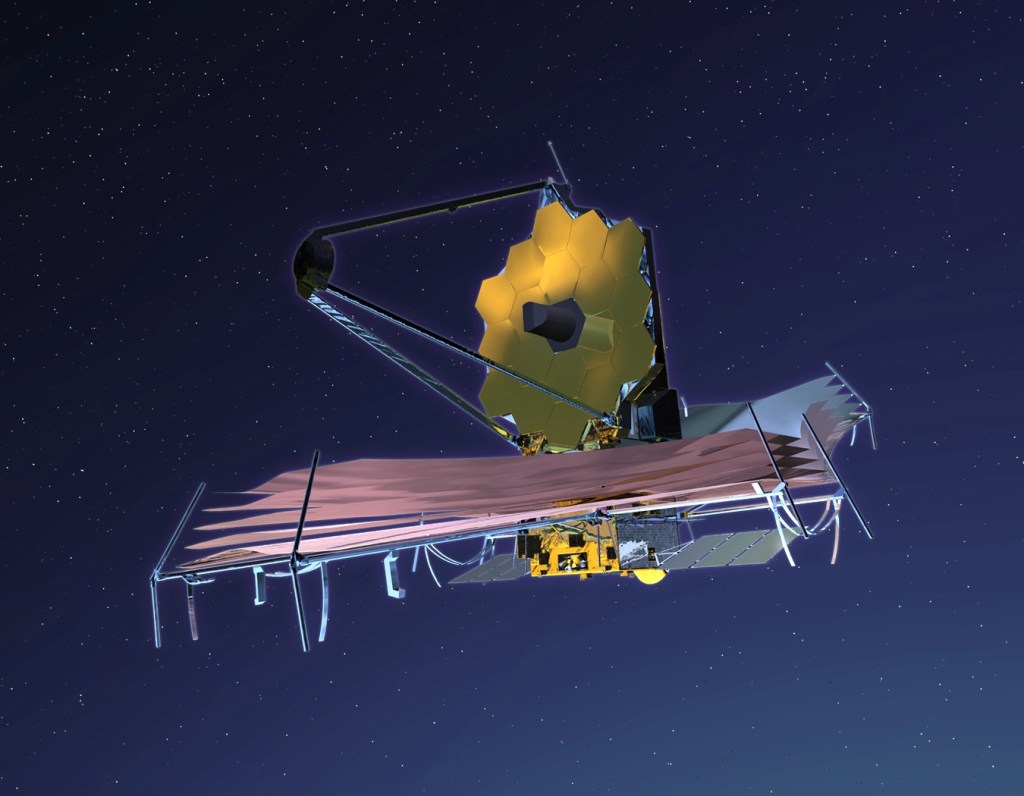
Thanks to the James Webb Space Scope and the emergence of global social media, people all around the world are currently being forced to change their perceptions of time and space in two different ways. First, and most significantly: with each new image from outer space, our planet and our solar system shrinks. That Sun In The Middle Of Eight Planets Solar System Carnival Ride-Like Celestial Model is no longer valid. Hell, we’re watching stars exploding.
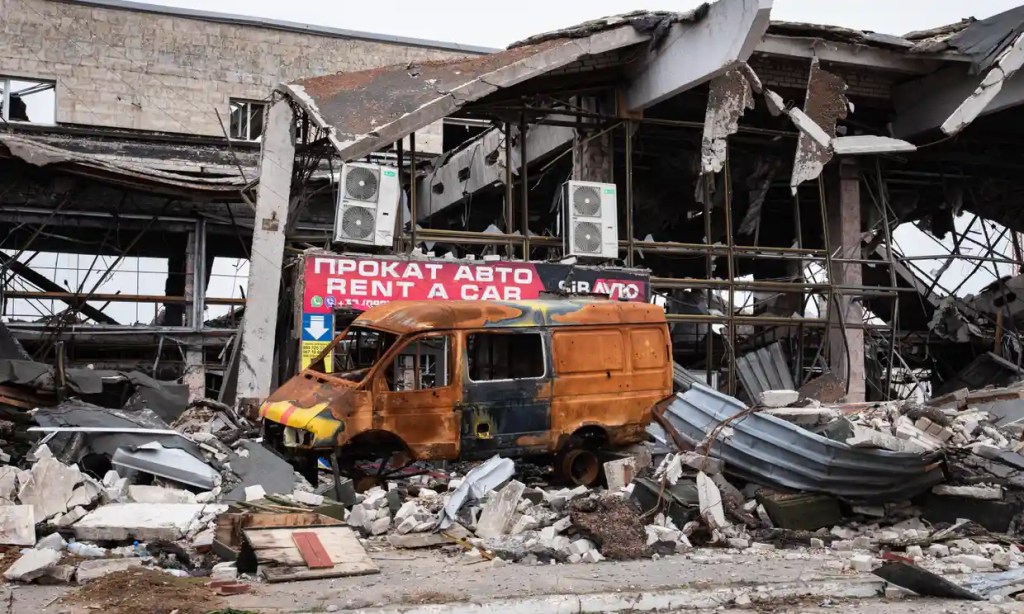
from The Guardian 9 January 2023

Simultaneously, we’re able to watch global news as it happens: Russia, destroying the Ukraine as it tries to reclaim former empirical cities; national and world leaders acting like five year old boys on the playground. There’s social upheaval in Iran. In the U.S.A., we’re bickering over identity. Gender identity. Individual identity. National identity. Regional Identity. Social identity. Political identity. We’re hanging on a thread between Democracy or Autocracy, as Jonathon Capehart has said. As if anyone cares anymore. On some level, everyone realizes that thinking about Earth as separate states, nations, even continents, is not viable anymore.

The transition we’re going through, whether we like it or not, asks us to give up our national and local differences and begin acknowledging that we’re global citizens, and tending the earth is are most important task right now. We’re all going through torment right now, because our earth is suffering. She’s been traumatized. Or is it menopause? We alone have the power to revive her. Earth can still nurture us, if we nurture it. If we want our children and grandchildren to enjoy our beautiful home, we’re all responsible for our planet’s survival.

Based on the last time humanity shifted paradigmatically, it could take a century for humanity to make this intellectual transition. With all the wars and bickering that we’re doing, I wonder if we have that much time left?
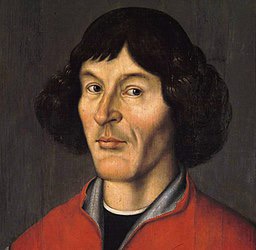
Wikipedia, “Nicolaus Copernicus
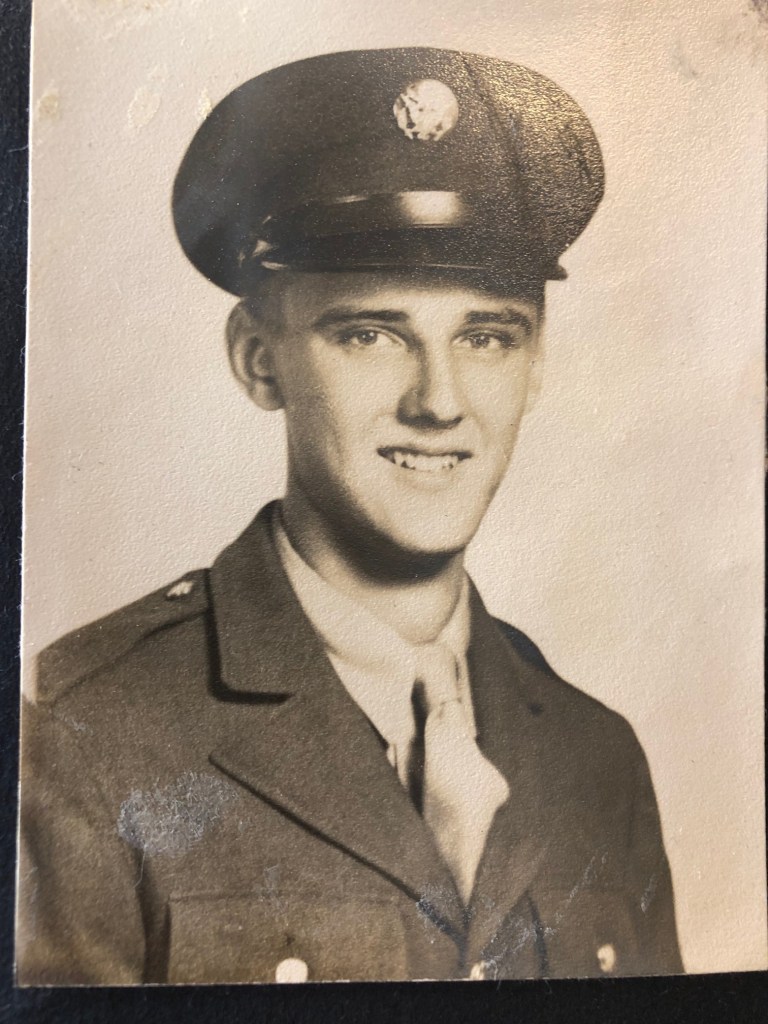
Honoring D-Day, and my Dad.

So, Monday, June 6, was D-Day: the anniversary of the Normandy landings in 1944. I didn’t realize it until late in the day. Today, to honor it, I watched the address Eisenhower delivered to the men. Listen to it.

Looking at the faces of these enlisted men in the audience, I see my young father.

My parents – maybe yours, too- spent their adolescence witnessing unfolding reports about the second world war in much the same way we are today experiencing Russia’s assault on the Ukraine. In the 1930’s, as images of destruction and genocide became commonplace, the majority agreed that Hitler and Stalin’s facism was evil. My father’s generation was sent to save us.

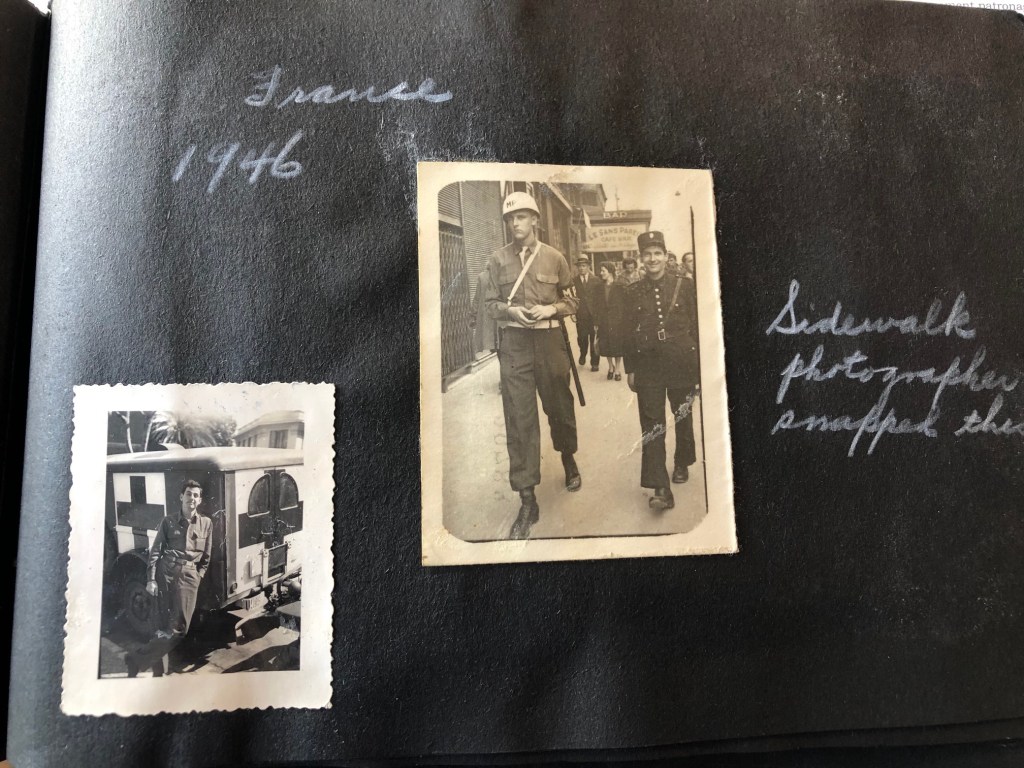
Drafted in 1944, my dad did not see any actual battle. He was shipped out in peacetime as a military police officer. Stationed in Southern France, he was issued a motorcycle. His patriotism grew as the liberated world welcomed him. He was adored. He learned French quickly, because of Latin skills learned at a Jesuit high school and contemplations of priesthood. By the time he returned, he was fluent in French, and no longer confident in his vocation. He started college on the GI Bill before he married. He tried to earn his language credits by taking French backwards – French 4 freshman year; French 3 sophomore year; French 2 junior year; French 1 senior year. They caught up with him in the senior year, made him take another year of language. German. He struggled with it.

No matter, he had reason to be cocky. He was a member of The Greatest Generation.

A page out of dad’s World War II photo album – the only photo album he ever kept.

Facism’s face is rising again. Genocide is happening in real time, and we have been asked to witness it. It’s happened before: either by choice or force, charismatic dictators have taken over when democratic government appeared to be falling apart.

This past Monday was D-Day. How did you acknowledge it?

via army.mil

Happy Birthday, Mom.

The older I get, the more I believe that eternity and memory exist in the same domain. What we remember remains eternal, as long as the capacity for memory lasts.

The internet and social media have become storage places for memory. The permanence it offers punctures the restrictions of a single human life. Once something is posted, it remains eternally. Imagine this blog, if you will, as a dot on a radio wave, arcing through the heavens at this moment, to remain there in an eternal loop long after this planet is gone.

I feel a great compulsion to remember forgotten people by writing about them, in one form or another, in order to give them their own little star in the constellation of universal memory.

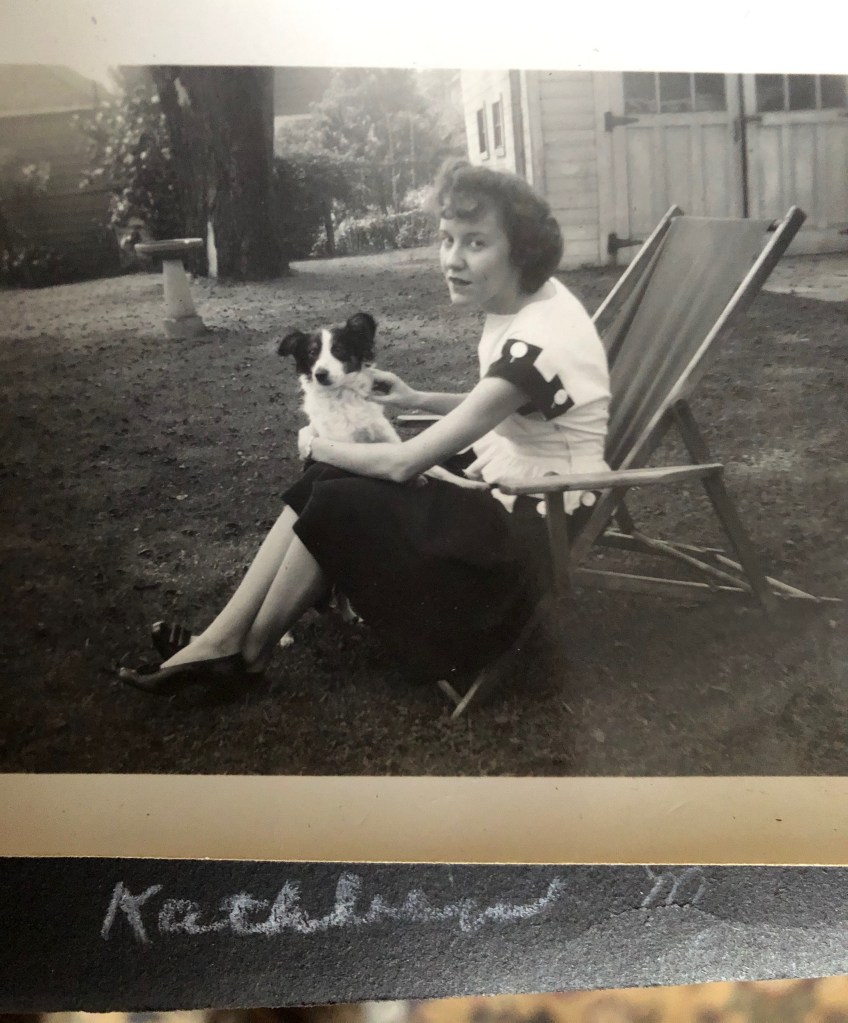
So on this day, February 12, 2022, I remember my Mom, Katie, who shared her birthday with Abraham Lincoln. The last time I saw her, on her birthday, 2020, her Lewy Body Dementia was fairly advanced. She was prone to hallucinations and to saying exactly what she was thinking. During that birthday visit, I told one of her caregivers it was Katie’s birthday, adding: “Mom shares a birthday with Abraham Lincoln!” (The caregiver was young enough to not know February 12 was Lincoln’s birthday.) Mom’s immediate reply:”Yeah, Abe Lincoln. Lucky him!”

The caregiver said, in her sweetest voice: “why is Abe Lincoln lucky Katie?”

Mom’s reply: “He’s dead!”

Katie and Me, February 7 (five days before her birthday) 2020

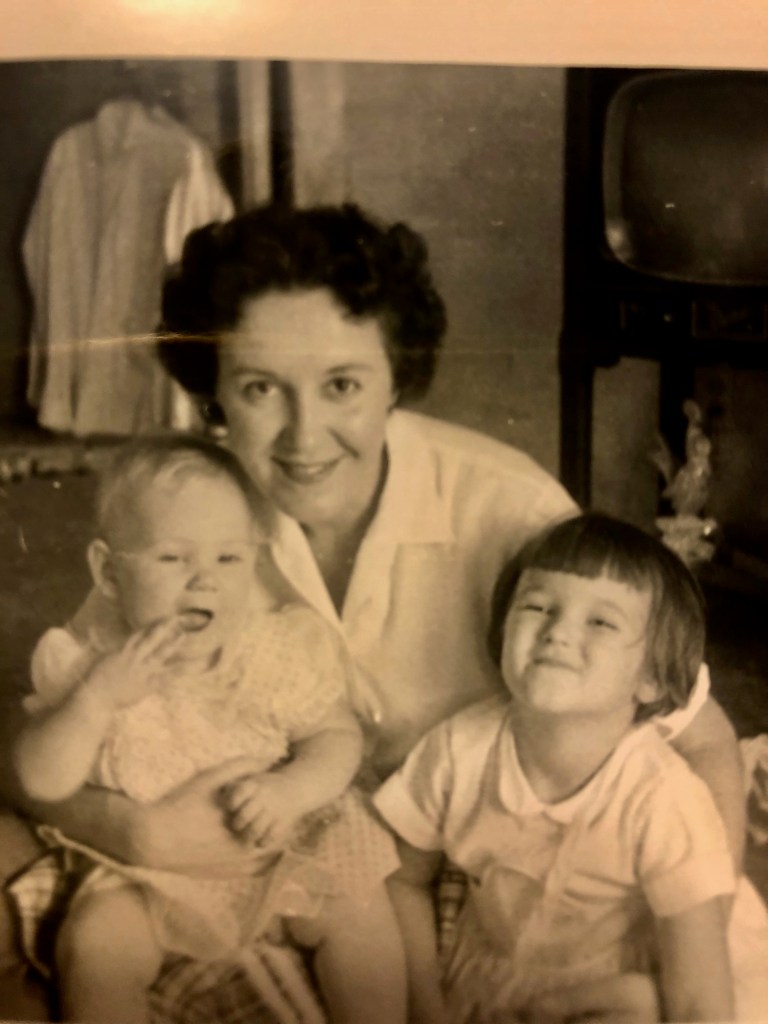
Now, there are a few things I know about my Mom, and one of them is that she would hate that picture of her and me . Yeah, she looked pretty good for 92, but if she had her way, she would have never ended up old and demented. She liked looking pretty. She felt she owed it to whomever she encountered to look her best.

I suspect most people have a favorite age – an age when we felt most comfortable in our own skin. I liked my 30’s and 40’s. But I’m also quite content with now. For others, like Katie, it was their 20’s: the years when she worked, met my dad, and had her first two children. (She was happy with her other children, too, for sure. Unfortunately, I suspect things were dicey with my dad then. Though we would have never guessed it at the time, this also became apparent in the last year of her life, when, in her hallucinations, she yelled at him and complained about him.)

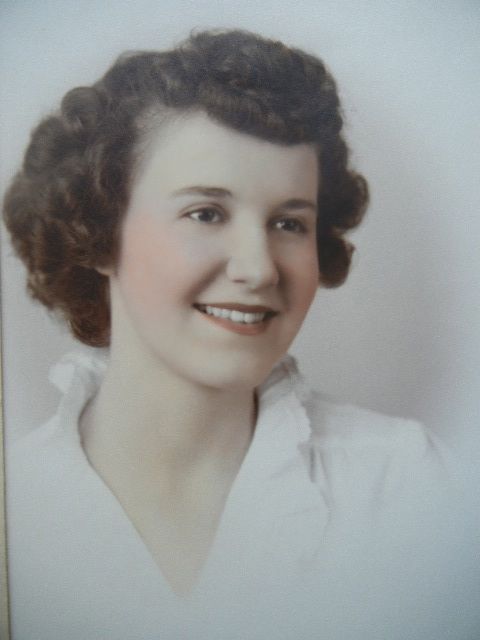
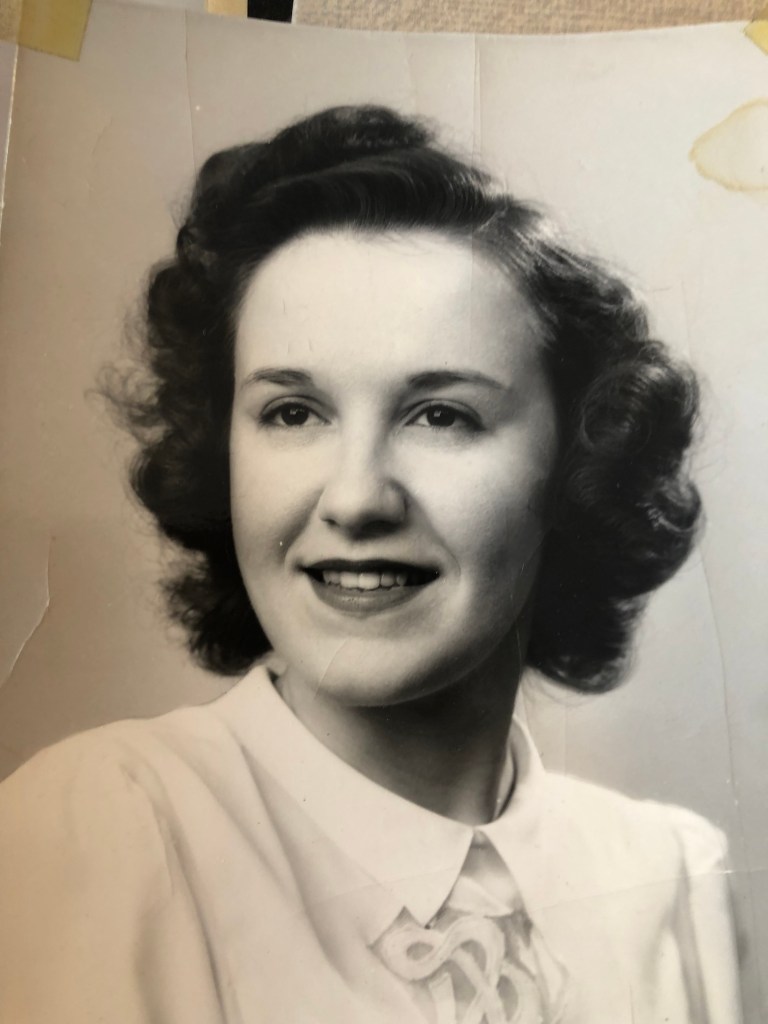
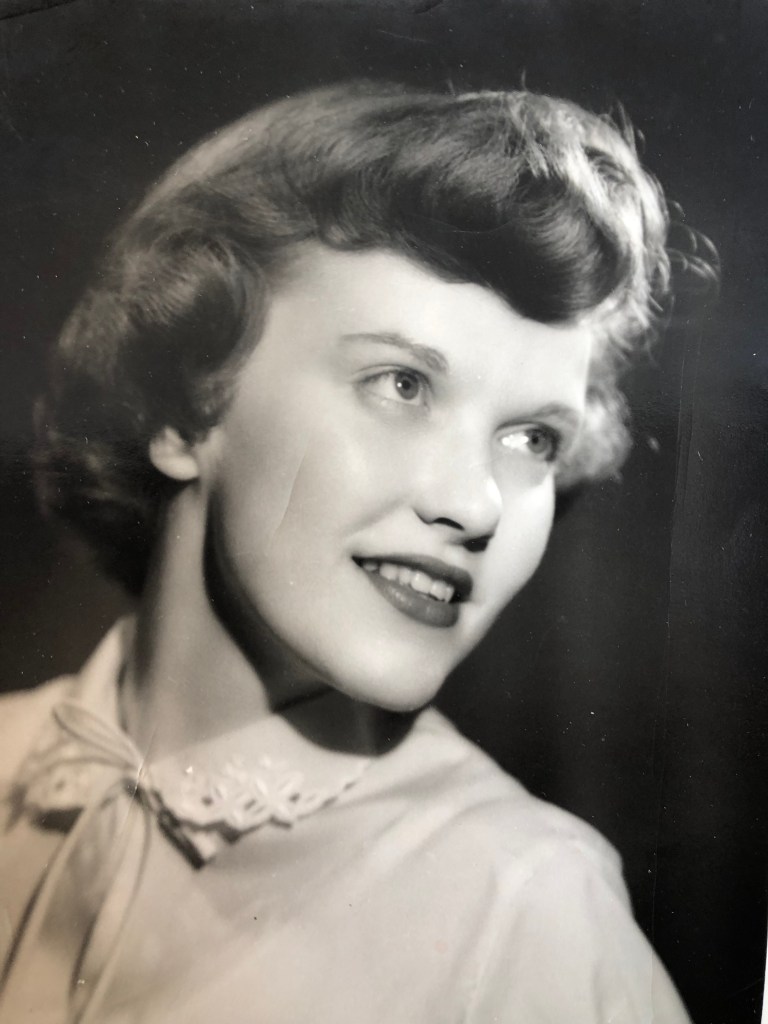
Mary Kathleen, graduating from St. Stephen’s High School, Cleveland, around 1945.

A significant difference between Lewy Body Dementia and other dementias is the hallucinations. While she was still at home, Mom was constantly seeing something on the roof of the neighbor’s house. Sometimes it was a man, just standing there. Sometimes he was mowing the lawn. Climbing a tree. Lighting a fire. The nights I stayed with her, I experienced her night hallucinations. She saw ghosts. They were often behind me. When I asked her to describe them, she told me they were making faces at me. The most common ghost was her mother, Christiana Thompson.

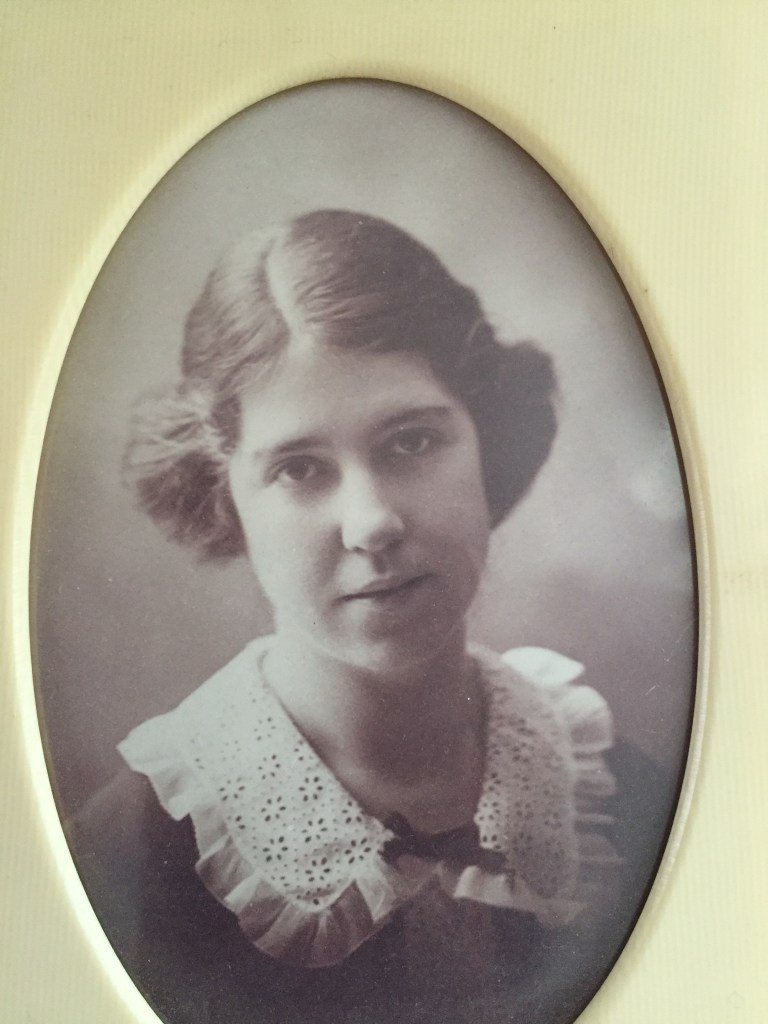
Christiana Loretta Thompson

Now, this didn’t surprise me too much. A psychic once told me that my maternal grandmother was my guardian angel. I believed her, because I needed an angel like her.

When she appeared in my mom’s hallucinations, Christiana (Chris) probably looked like this.

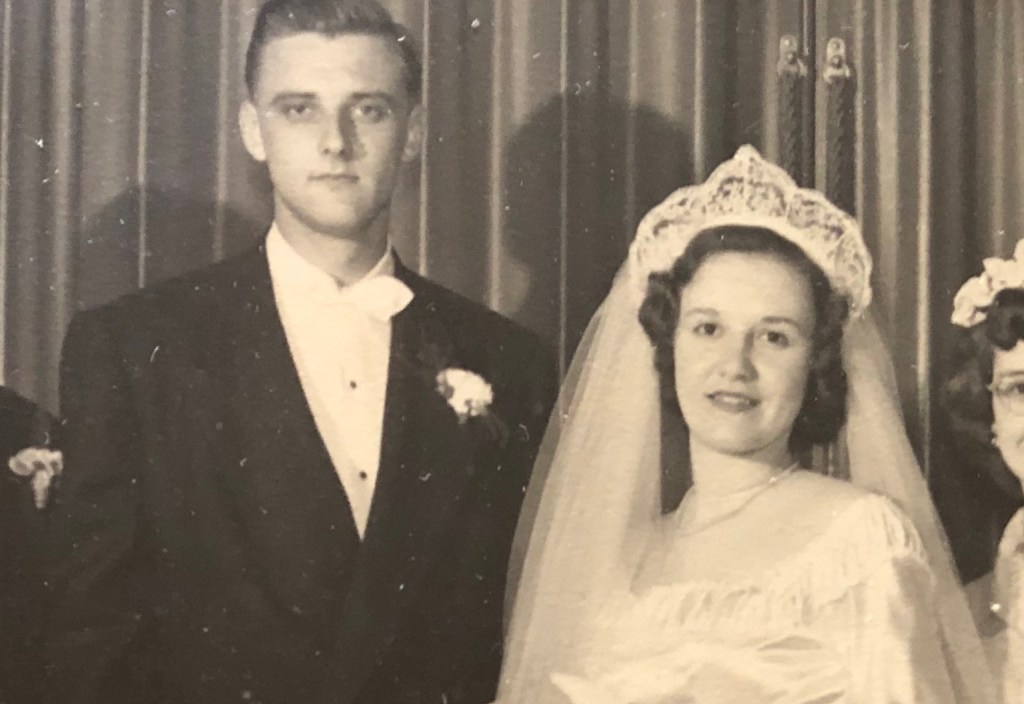
Gus and Chris, 1948

Being married to an Irishman named Gus, Christiana became Chris.

Katie adored Gus. In the last months of her life, she told me he was with her all the time.

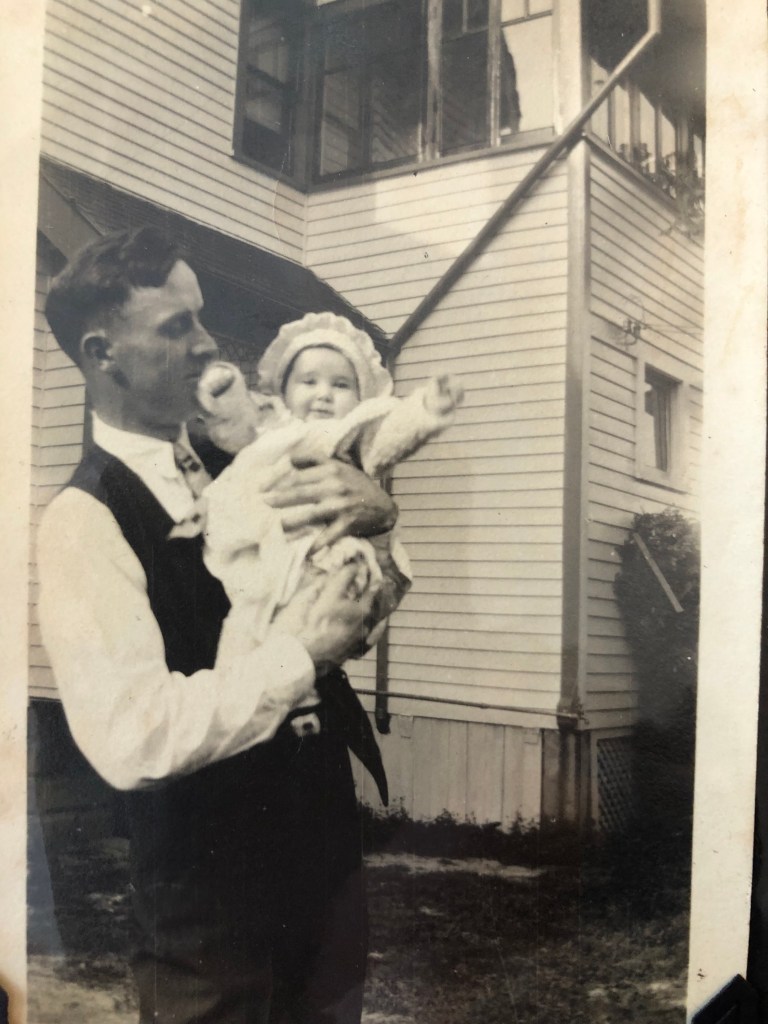
Gus and Baby Katie,

During those transitional months, I read Dr. Christopher Kerr‘s book Death Is But a Dream. As the Chief Executive Officer of Buffalo’s Hospice and Palliative Care center, Kerr and his team specialize in ELE’s – End of Life Experiences. In this book, Kerr walks a fragile line between pragmatism and and spirituality. Everyone, he reports, hallucinates as they approach death. Even the most tormented individuals end their lives in peace, accompanied by vivid hallucinations of those who loved them most.

Like my mother did. As she lingered at death’s door, Gus never left her side. Her mother Chris was there beckoning, as was her baby brother Jim, who preceded her by three months. Her sister Rose Marie probably greeted her with some comment like “what took ya so long?” Three months after Katie, her sister, my namesake Aunt Mary Lou, followed.

Considering the way my mom talked to me at the end of her life, I believe that in her near-death dreams, she saw herself as young again. (I asked her once how old she was. Her response: “well, I’m younger than you! Look at you! How did you get so old?”) Young, too, were her parents. Her brother. Her sister. Her lifelong best friend, Jeannie. Ultimately, my father. She had trouble with her memories of my father, but he was there in the end, too.

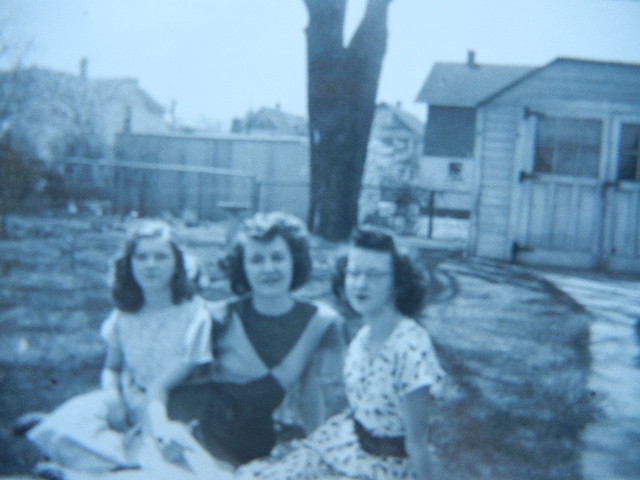
I have the photo album Katie kept, when she was in her late teens/early twenties. It was preserved well, and she meticulously labeled each photo. She looked at it often as she grew older, to remember who she was when she was happiest.

Today, as I look at it, I let myself believe that this is how my mother looks in her afterlife. Happy Birthday, Mom.